Tube Pins Overview
Tube Pins are stainless steel pins that are fixed inside tubes (cannulas) to provide greater strength to fragile small diameter pins. These tubes rest upon the lower float plate.
The Tube pins vary in diameter (from 0.229 mm to 0.914 mm), they also vary in the total length of the pin (from 33 mm to 62.2 mm) and the length of the exposed pin (from 12 mm to 17 mm to 30 mm to 41.5 mm) long. The exposed length terminology is used to define how far the pin is able to extend below the bottom float plate. The 12 mm long exposed length pins are used on robots with “Z” limitations and the 30 mm and 41.5 mm long exposed length pins are used when delivering to or from the bottom of a deep well plate. For all other applications use either the standard 17 mm FP_ or FP_N series pins.
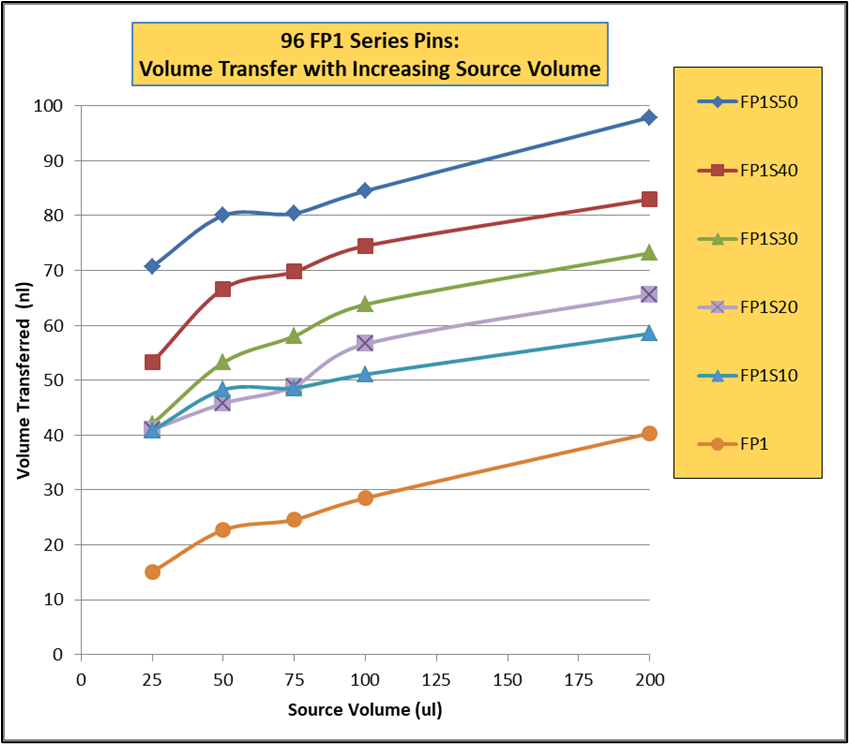
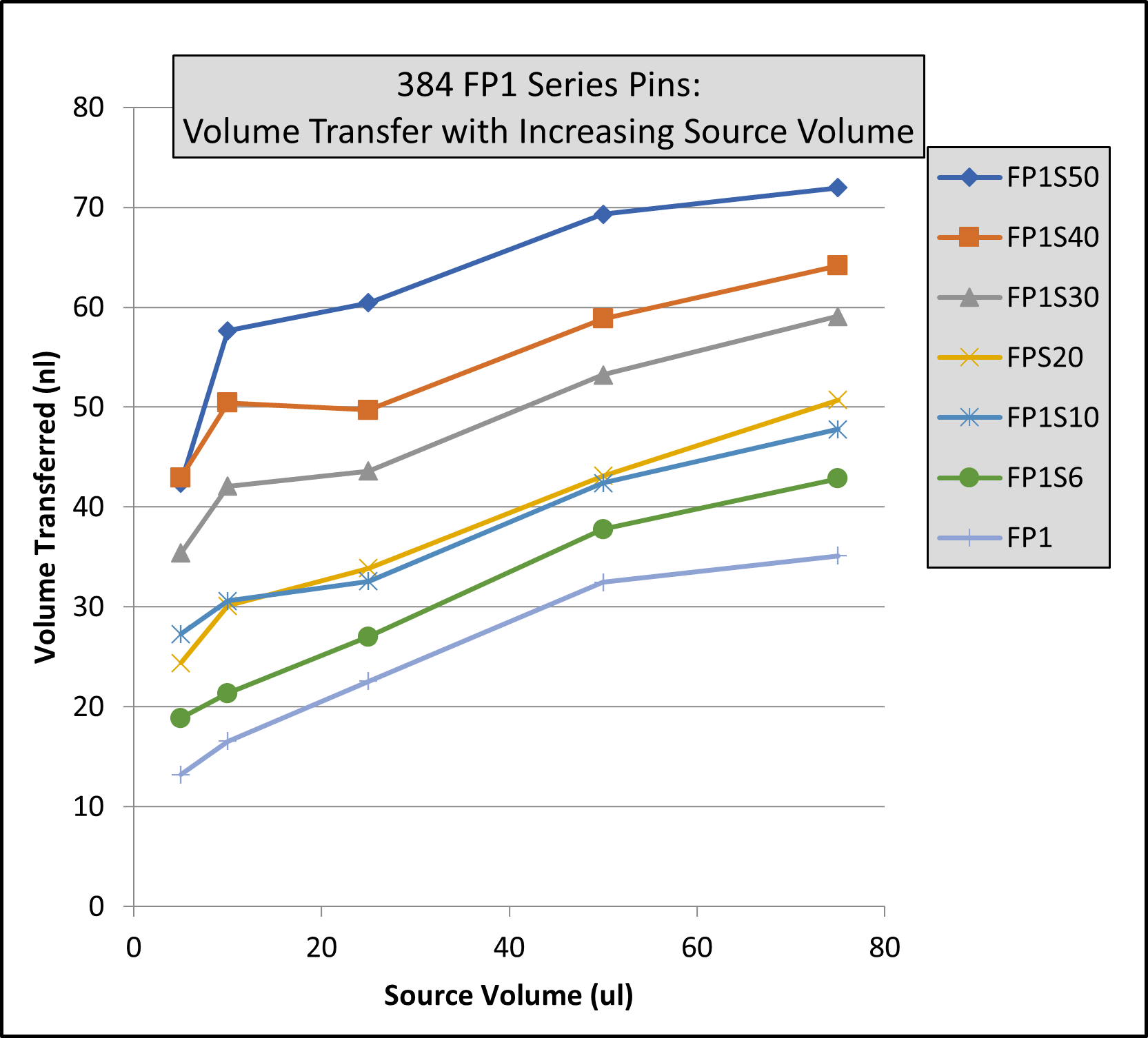
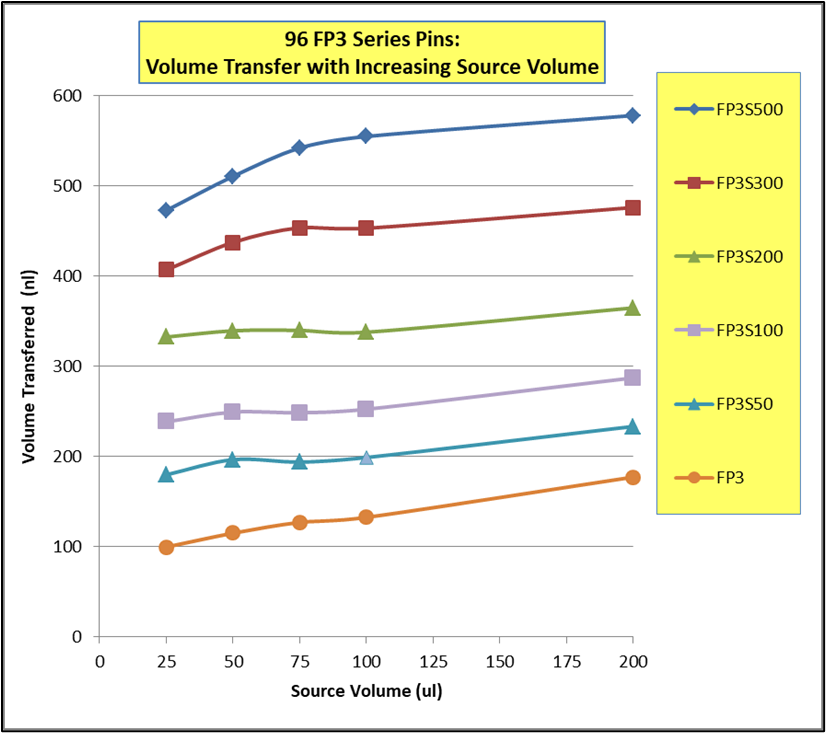
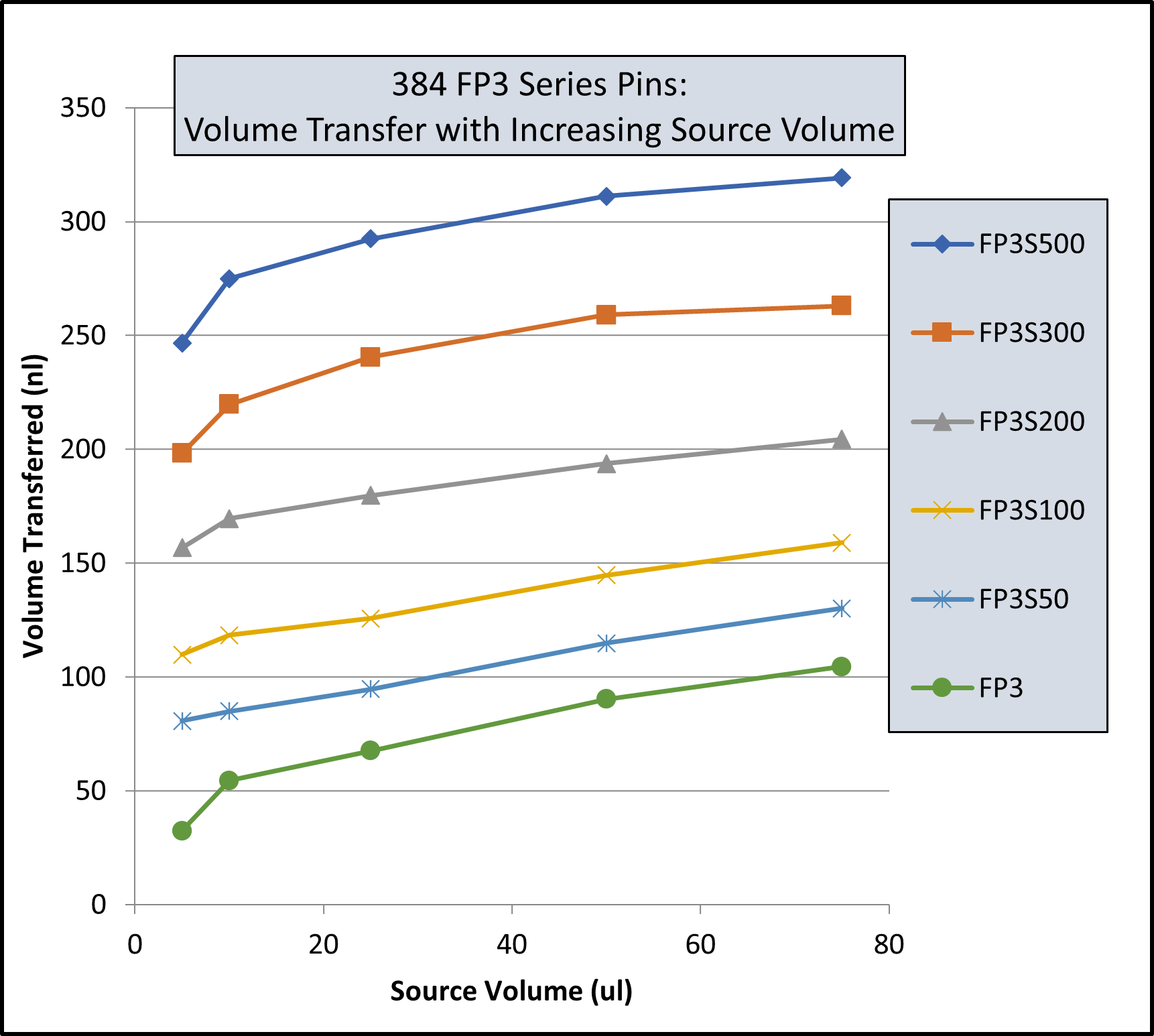
The volume of liquid transferred on a pin will vary with the diameter of the pin, the depth to which it is submerged into a liquid, and the speed the pin is withdrawn from the liquid. Also, the surface tension of both the pin and the liquid will affect the volume transferred.
The Tube pins can be modified by cutting a very small precise slot in the tip of the pin which fills and drains by capillary action. The advantage of the slot pin is that if there are different volumes in the source wells (if the plate has been cherry-picked many times) the slot pin will be less affected by the different volumes in the source plate. Slot pins because of filling by capillary action are able to make transfers from very small liquid volumes in source plates. Slot pins also yield greater precision. The volume in the slot of a tube pin varies from 6 nL to 2,000 nL.
Both the Tube style pins and the E-clip pins can be coated with a hydrophobic layer to reduce non-specific binding to the pin.